The bet
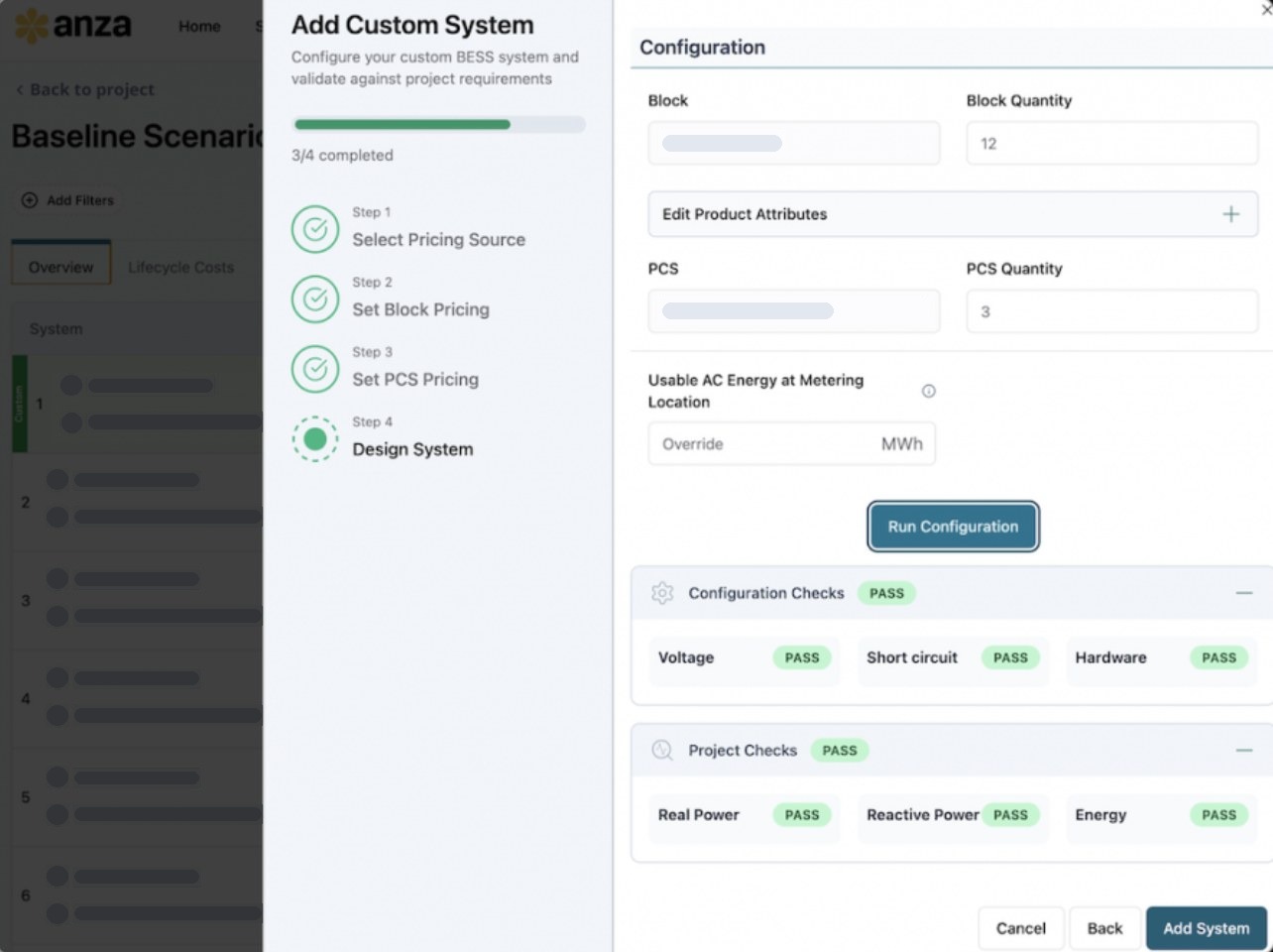
The original job was narrow. A major manufacturer that wasn't a supplier on the platform had public product data, and many of our buyers already held quotes from them. If buyers could enter their quote and we filled in the rest from that public data, they could evaluate the manufacturer's systems on Anza without the manufacturer signing on.
The assumption was that enough buyers had those quotes and wanted to run them through the platform. That was never tested before we built.
Building it
Design ran from the end of Q3 to mid-December 2025, longer than planned. Scope kept growing. A tool for one manufacturer's quotes became a general builder: buyers could enter any custom quote, with any block and PCS details, and check whether the resulting system was compatible with their project parameters. Each addition needed long discussions about pricing sources, block and PCS pricing, and the checks a system had to pass.
What happened
Custom systems launched in February 2026. By October, only 13% of active storage users had used it, and the accounts touching it never compounded. The instrumentation showed where it broke: most people who abandoned the add flow left at the first step, Select Pricing Source.
Custom systems never compounded
Monthly active accounts on storage vs. accounts touching custom systems (2026).
What I took from it
The flow asked buyers for data the library existed to spare them. The buyers who truly needed custom systems were the few who already had that data, so demand was narrower than the bet assumed.
- Validate demand with a cheaper probe first. A lightweight prototype or request form would have shown how many buyers wanted this before we built the full flow.
- Instrument the funnel from day one. The drop-off step was visible in the data; seeing it sooner would have saved months.
- Design data entry around what users have. Asking for what the model needed is where the flow lost people, at the very first step.
- Treat growing scope as a signal. When every discussion added complexity, that was a sign to narrow the problem, not to keep building.
What I'd push next. Rather than reworking the flow, I'd go back to the small group who do use custom systems and learn what they have in common. If they share a profile, the feature becomes a focused tool for that group. If they don't, the right call is to simplify it or retire it.
The most expensive part of this feature was the question we didn't ask before building it.