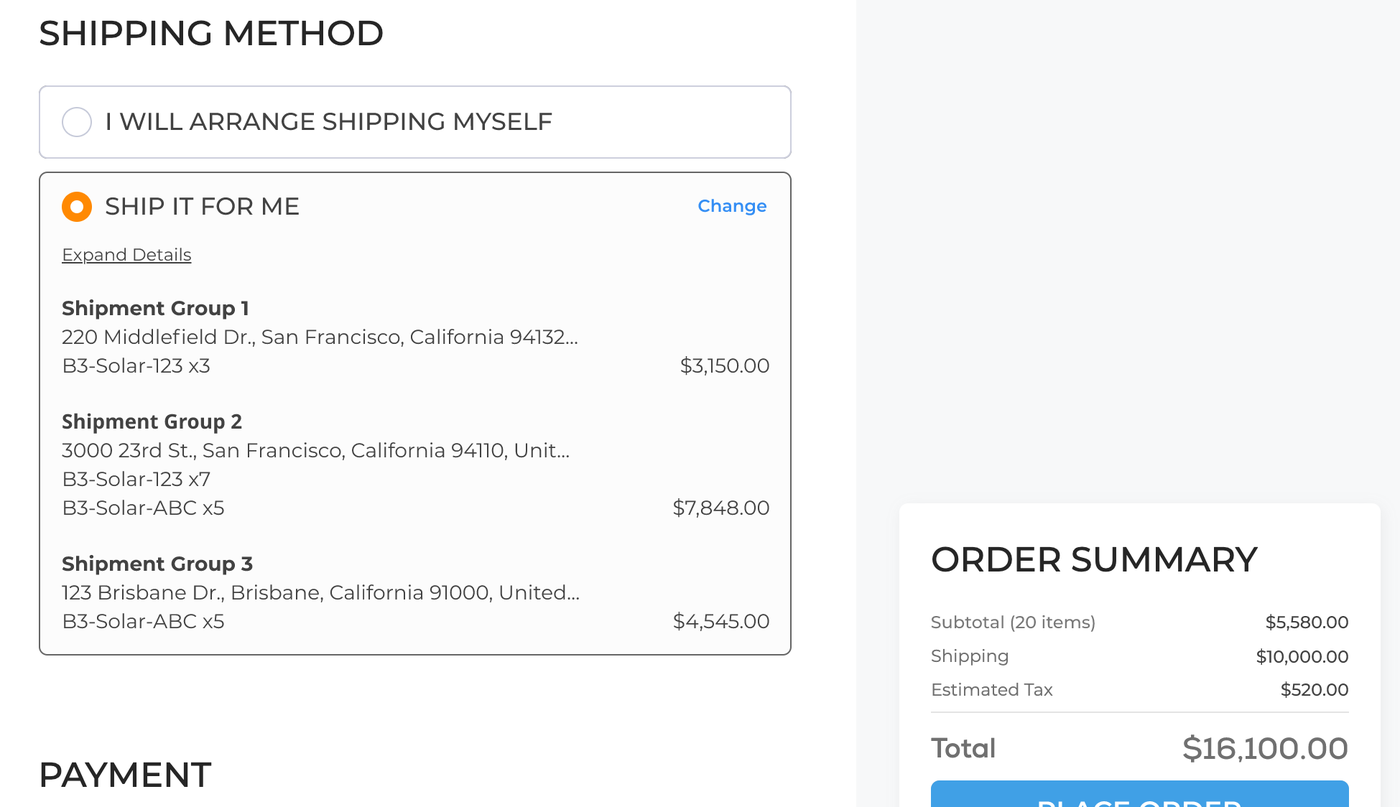
The problem
In industrial e-commerce, buyers usually pay for products up front and for shipping separately, which leads to unexpected fees and frustration. Big orders rarely go to one place on one day.
The goals for the new checkout:
- Offer a shipping choice per sales channel: self-pickup, or the seller ships.
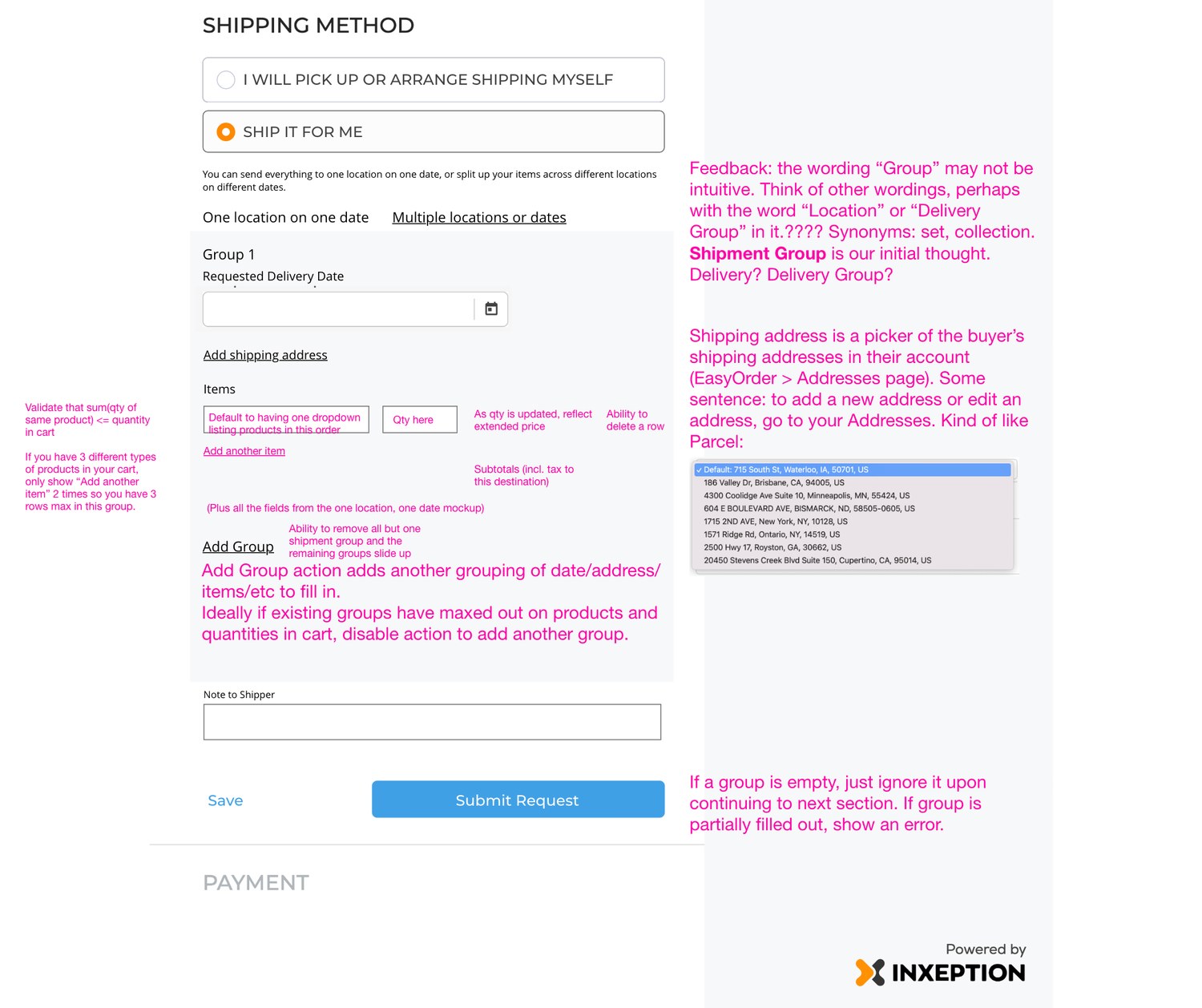
- Let buyers split an order into groups delivered on different days or to different locations.
- Charge the true shipping cost by breaking products into shipments and querying Inxeption's shipping-quote APIs.
At the time, no company had implemented this approach for industrial products.
Research
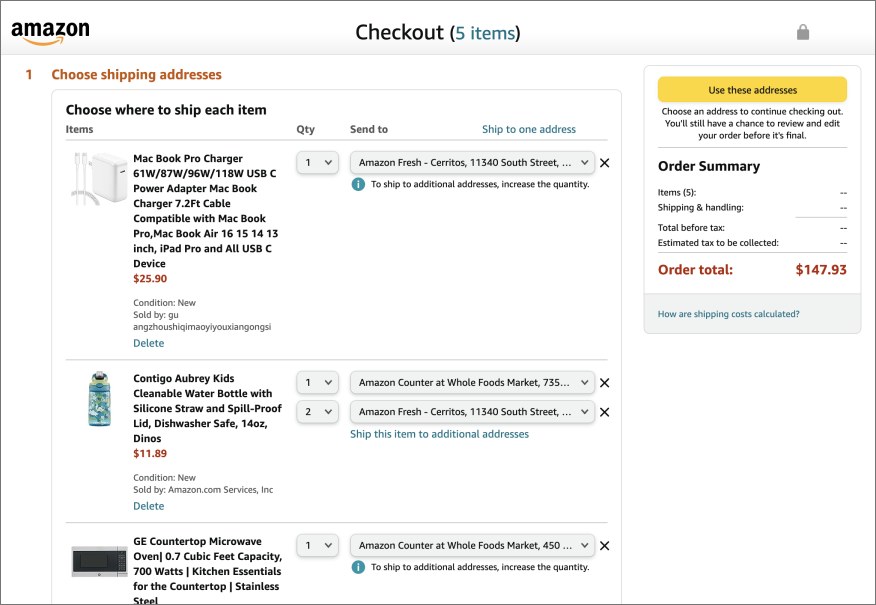
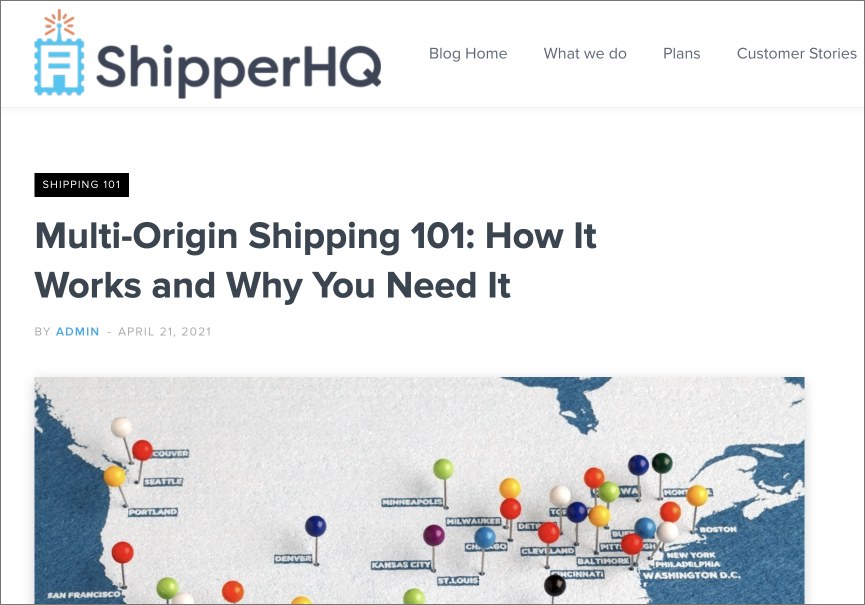
I started with visual research into how Amazon and other commerce platforms handle multiple ship-from origins and ship-to destinations.
Structuring the flows
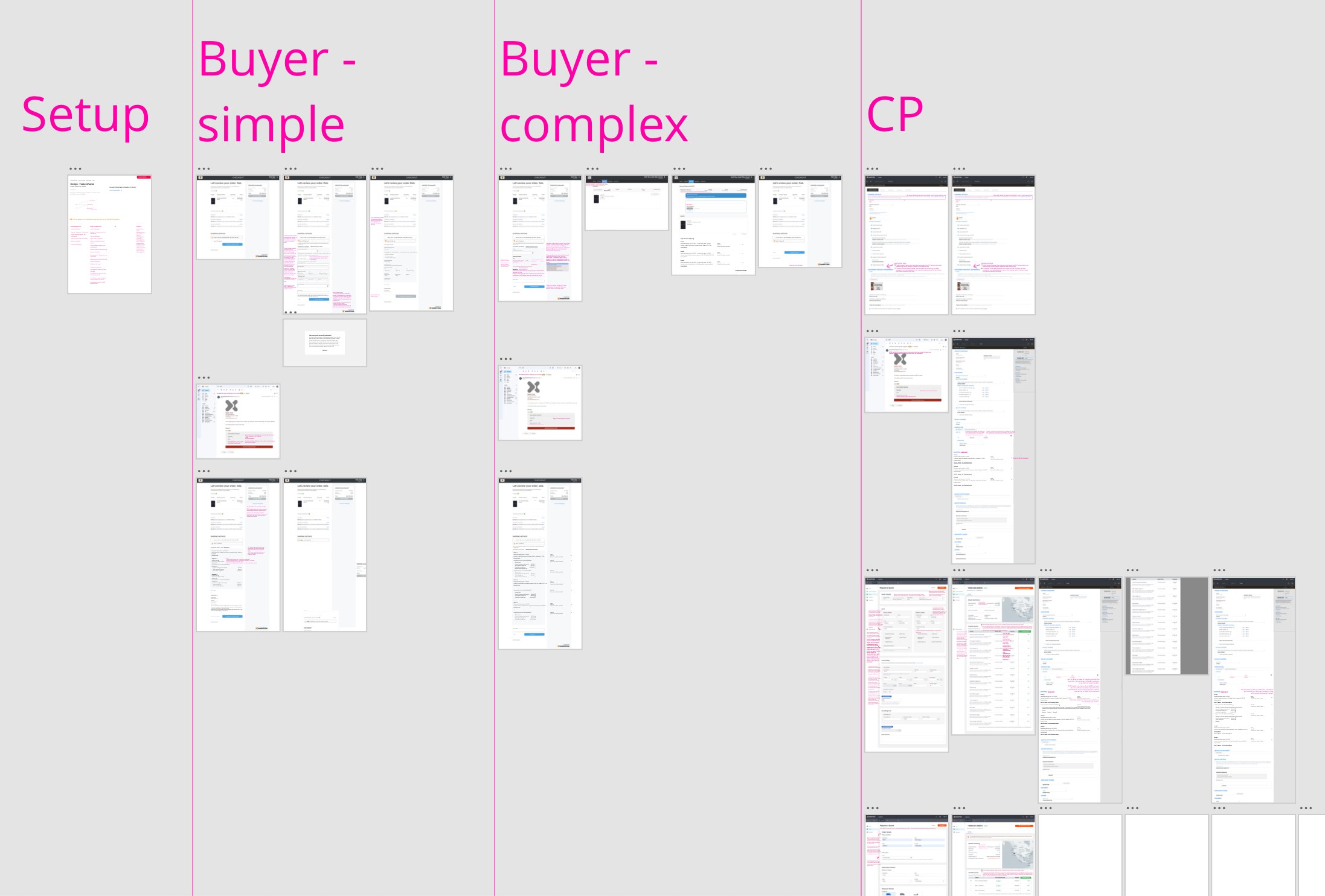
I split the existing checkout into two buyer flows. Buyer-Simple covers pickup, or shipping to one location on one date. Buyer-Complex covers shipping to several locations or on several dates.
On the seller side, a new shipment-settings section on the channel details page let commerce partners decide which options buyers could choose.
Requirements
- Buyers can add as many shipment groups as they need, as long as the cart has enough items to allocate.
- The order summary updates as addresses change, because shipping fees and taxes depend on the address.
- Buyers can remove groups, but at least one always remains.
- Open question we resolved: collect delivery details during checkout, or after the order is placed?
The final design
We collected delivery details during checkout, so the buyer sees the real total before paying. I worked with the PM to keep required fields to a minimum, so nobody faces extra forms after confirming an order.
Open the checkout prototype ↗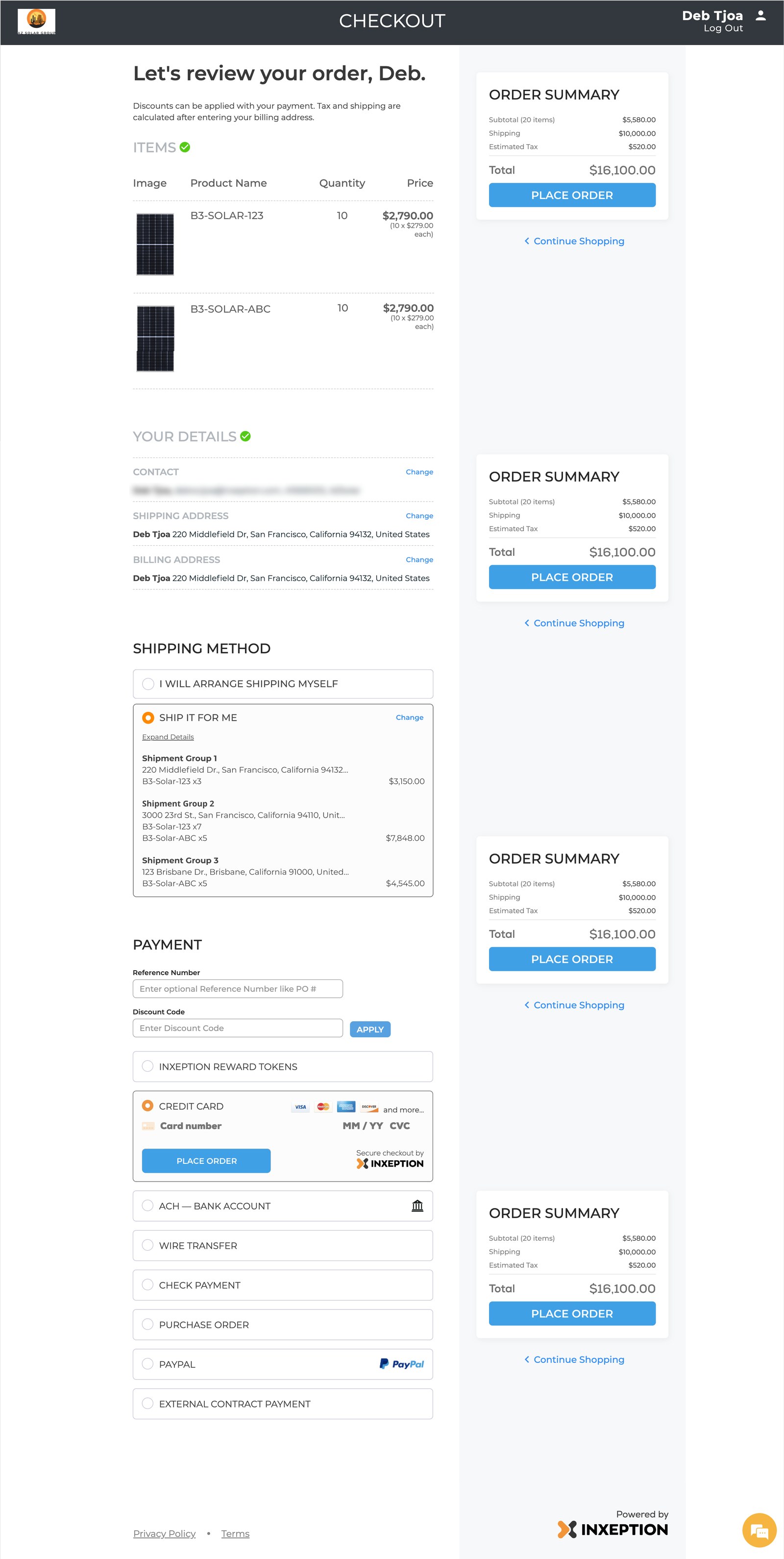
Also at Inxeption: AI search vs. browse
For the desktop directory, I designed a way to switch between an AI search mode and a standard browse mode, so buyers could ask for what they need or scan the catalog the way they always had.
Also at Inxeption: seller memberships
The seller sign-up flow walks prospective sellers through membership tiers, a page for each benefit, and a closer look at the Managed Store app.
Open the membership prototype ↗Reflection
What I'd push next. I'd test the complex flow with real buyers placing real split orders. The shipment-group model held up in design reviews, but the true test is a buyer allocating hundreds of items across sites and dates, and I'd want to see where that breaks.
What I learned. Nobody in industrial e-commerce had solved this, so we borrowed from consumer platforms that had. Amazon and the shipping platforms gave us a shared starting point, and splitting the work into simple and complex flows kept the common case fast while still serving the hard one.